
Agarose Chromatography Media for High-Performance Bioseparation
Premium crosslinked agarose resins for protein, antibody, and nucleic acid purification — from lab-scale research to industrial biopharmaceutical manufacturing.
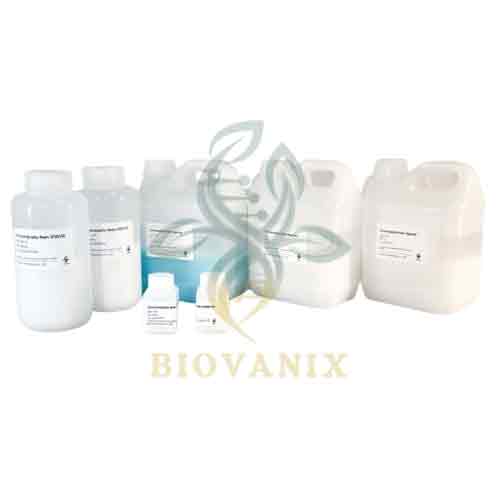
Biovanix Agarose Media is a conventional biological separation medium crafted from highly crosslinked agarose microspheres. It utilizes high-performance agarose raw materials sourced from abroad to maintain a consistent level of product quality. This product preserves the remarkable hydrophilicity and expansive network structure inherent to natural polysaccharide compounds, demonstrating excellent affinity for bioactive macromolecules. It is characterized by high loading capacity, broad applicability, non-specific adsorption, and rapid flow dynamics. Consequently, it is extensively utilized in the laboratory-scale preparation of biological macromolecules, including proteins, nucleic acids, peptides, and polysaccharides, as well as in the large-scale industrial production of biopharmaceuticals and bioengineering applications.
50+
100–200
pH 3–14
0.1–1.0 M
✔ ISO 9001 Certified
✔ GMP Ready
✔ Fast Global Delivery
✔ 50+ Products in Stock
Browse by Chromatography Type
Select the right media category for your bioseparation application
Affinity Media
Protein A/G, Ni-NTA, GSH, Heparin,
MMA/MMC for targeted capture
Ion-Exchange Media
DEAE, Q, CM, SP – strong & weak
anion/cation exchange resins
Hydrophobic Media
Butyl, Phenyl, Octyl – HIC resins
for polishing & aggregate removal
Gel Filtration Media
Size exclusion chromatography formolecular weight-based separation
Key Technical Characteristics of Agarose Chromatography Media
Agarose-based media represent the gold standard matrix in the field of bioseparation. Derived from natural polysaccharides and optimised through modern cross-linking technologies, these matrices exhibit a unique combination of physicochemical properties ideal for the purification of proteins, antibodies, and other biomacromolecules.
01 Exceptional Hydrophilicity and Bio-inertness
The fundamental advantage of agarose is its non-toxic, hydrophilic nature.
Low Non-Specific Binding (NSB)
The agarose backbone is rich in hydroxyl groups, creating a surface that interacts favorably with water but exhibits minimal hydrophobic interaction with proteins. This significantly reduces non-specific adsorption, ensuring high recovery rates and preventing the denaturation of sensitive biological targets.
Biocompatibility
The inert environment preserves the tertiary structure and biological activity of enzymes, antibodies, and other complex proteins during the separation process.
02 Macroporous Reticular Structure
Agarose forms a three-dimensional hydrogel network characterised by large, open pores.
High Mass Transfer
The macroporous structure (typically adjusted via agarose concentration, e.g., 4% or 6%) allows for rapid diffusion of macromolecules into and out of the beads. This is critical for maintaining high resolution and dynamic binding capacity (DBC), even at higher flow rates.
Accessibility
Unlike silica or smaller-pore polymers, agarose is particularly suited for separating large biomolecules, such as immunoglobulins (IgG), virus-like particles (VLPs), and plasmids, as these molecules can easily access the interior surface area of the beads.
03 Versatile Surface Chemistry for Ligand Coupling
Agarose is chemically versatile and easily activated, making it the preferred backbone for affinity and ion exchange chromatography.
Ease of Derivatisation
The primary hydroxyl groups on the sugar residues serve as ready attachment points for various chemical activation methods (e.g., Cyanogen Bromide, NHS-ester, Epichlorohydrin).
Ligand Stability
It supports the multipoint attachment of ligands (such as Protein A, Protein G, or charged functional groups) without compromising the stability of the matrix or the activity of the ligand.
04 Enhanced Mechanical Stability (Cross-linking)
While native agarose is mechanically soft, industrial-grade agarose media undergoes chemical cross-linking to enhance its rigidity.
Pressure-Flow Characteristics
Highly cross-linked agarose (often designated as “Fast Flow” or “High Flow”) can withstand higher back-pressures. This rigidity prevents bed compression and allows for high linear flow rates, which are essential for shortening cycle times in industrial-scale manufacturing.
Scalability
The mechanical strength ensures that performance parameters remain consistent when scaling up from laboratory columns to industrial process columns.
05 Robust Chemical Stability
Cross-linked agarose exhibits significant resistance to chemical degradation, facilitating rigorous cleaning and sanitisation protocols.
CIP Resistance
It tolerates exposure to harsh cleaning-in-place (CIP) agents, most notably high concentrations of Sodium Hydroxide (0.1 – 1.0 M NaOH). This allows for the effective removal of precipitated proteins, lipids, and endotoxins, extending the lifespan of the resin.
Solvent Compatibility
It is stable in aqueous buffers across a wide pH range (typically pH 3–14) and compatible with many organic solvents and chaotropic agents (e.g., urea, guanidine hydrochloride) used for column regeneration.
Need Help Selecting the Right Media?
Our technical team provides free consultation to match the optimal agarose resin to your specific purification requirements.
Complete Agarose Chromatography Media Catalog
50+ products spanning affinity, ion-exchange, hydrophobic, and gel filtration chromatography — all manufactured under ISO 9001 quality management.
Affinity Chromatography Media
High-specificity affinity resins for targeted capture of recombinant proteins, antibodies, fusion proteins, and serine proteases. Available in standard (6FF/4FF) and high-performance (6HP) series.
Standard Affinity Series
Product | Dynamic Binding Capacity | Application |
40 mg His/mL | High load capacity Isolation and purification of recombinant histidine labelled (His-Tag) proteins | |
40 mg His/mL | ||
50 mg His/mL | Low Ni2+ leakage Isolation and purification of recombinant histidine labeled (His-Tag) proteins | |
50 mg His/mL | ||
25 mg His/mL | Mainly used for the separation and purification of histidine labeled (His-Tag) genetic engineering proteins containing EDTA or DTT and other components | |
25 mg His/mL | ||
35 mg IgG/mL | Affinity purification of various polyclonal and monoclonal antibodies | |
50 mg IgG/mL | Alkaline resistance, easy elution Affinity purification of various polyclonal and monoclonal antibodies | |
10 mg GST/mL | Isolation and purification of glutathione transferase labeled protein (GST fusion protein), glutathione transferase and glutathione dependent protein | |
1.5 mg AT Ⅲ/mL | Isolation and purification of AT Ⅲ, coagulation factor, lipoprotein, lipase and polysaccharide | |
1.5 mg AT Ⅲ/mL | ||
20 mg Trypsin/mL (High Sub) 10 mg Trypsin/mL(Low Sub) | Isolation and purification of Trypsin, thrombin, urokinase, kallikrein, prekallikrein and other serine proteases | |
25 mg BSA/mL | Widely used in the separation and purification of proteins, especially the removal of protein A from the monoclonal antibodies that have been shed through the protein A affinity medium, as well as antibody dimers, host proteins, nucleic acids, viruses. | |
60 mg BSA/mL | Widely used in the separation and purification of proteins |
Prosep Premium Affinity Series
High rigidity, high flow rate, high resolution, quick loading — engineered for demanding bioprocess applications.
Product | Dynamic Binding Capacity | Application |
Prosep MMA | 20 mg BSA/mL | High rigidity High flow rate High resolution Quick loading |
35 mg BSA/mL | ||
60 mg lgG/mL | ||
45 mg BSA/mL | ||
| 35 mg BSA/mL | ||
| 50 mg BSA/mL |
Ion-Exchange Chromatography Media
Complete range of strong and weak anion/cation exchange media for intermediate and polishing purification steps. Each ligand available in three performance grades: FF (standard), HP (high resolution), and XL (high capacity).
Standard Ion-Exchange Series
| Product | Dynamic Binding Capacity | Application |
| DEAE 6FF | 60 mg BSA/mL | Weak anion exchange medium: High Applicability (FF) High Resolution (HP) High Capacity (XL) |
| DEAE 6HP | 60 mg BSA/mL | |
| DEAE 6XL | 120 mg BSA/mL | |
| Q 6FF | 50 mg BSA/mL | Strong anion exchange media: High Applicability (FF) High Resolution (HP) High Capacity (XL) |
| Q 6HP | 70 mg BSA/mL | |
| Q 6XL | 140 mg BSA/mL | |
| CM 6FF | 100 mg LZM /mL | Weak cation exchange medium: High Applicability (FF) High Resolution (HP) High Capacity (XL) |
| CM 6HP | 120 mg LZM /mL | |
| CM 6XL | 120 mg LZM /mL | |
| SP 6FF | 130 mg LZM /mL | Strong cation exchange medium: High Applicability (FF) High Resolution (HP) High Capacity (XL) |
| SP 6HP | 160 mg LZM /mL | |
| SP 6XL | 160 mg LZM /mL |
Prosep Premium Ion-Exchange Series
Product | Dynamic Binding Capacity | Application |
90 mg BSA/mL | High rigidity High flow rate High resolution Quick loading | |
120 mg BSA/mL | ||
120 mg lysozyme/mL | ||
35 mg BSA/mL | ||
45 mg BSA/mL | ||
75 mg lysozyme/mL | ||
70 mg lysozyme/mL |
Hydrophobic Chromatography Media
Hydrophobic interaction chromatography (HIC) resins for polishing steps, aggregate removal, and separation of proteins based on surface hydrophobicity. Choose from weak, medium, and strong hydrophobicity ligands.
| Product | Dynamic Binding Capacity | Application |
| Butyl 4FF | 20 mg BSA/mL | Weakly hydrophobic Suitable for the separation and purification of aliphatic Protein |
| Butyl 6HP | 25 mg BSA/mL | |
| Phenyl 6FF(HS) | 30 mg BSA/mL | Strong hydrophobicity Suitable for the separation and purification of aromatic Protein (such as monoclonal antibody) |
| Phenyl 6FF (LS) | 15 mg BSA/mL | |
| Phenyl 6HP | 20 mg BSA/mL | |
| Octyl 4FF | 8 mg BSA/mL | Medium hydrophobicity Suitable for the separation and purification of strong lipophilic Protein |
| Octyl 6HP | 8 mg BSA/mL |
Gel Filtration Media
Size exclusion chromatography (SEC) media for molecular weight-based separation and buffer exchange. Visit the dedicated Gel Filtration page for complete product details and specifications.
Product | Range | |
Globular Protein(Da) | Glucan(Da) | |
G-10 | <700 | <700 |
G-15 | <1500 | <1500 |
G-25 | 1000-5000 | 100-5000 |
Product | Range (Globular Protein(Da)) |
30 PG | <10000 |
75 PG | 3000-70000 |
200 PG | 10000-600000 |
Media Selection Guide
Use this quick-reference guide to choose the optimal agarose matrix and grade for your application
4% vs 6% Agarose: Which Concentration?
The agarose concentration is inversely related to the pore size of the resin.
| Property | 4% Agarose | 6% Agarose |
|---|---|---|
| Pore Size | Larger | Smaller |
| Mechanical Strength | Lower | Higher |
| Ideal For | Viruses, plasmids, large protein complexes | General proteins, mAbs, recombinant proteins |
| Industry Status | Specialized | Industry standard |
Grade Selection: FF vs HP vs XL
Each ligand type is available in three performance grades to match your process requirements.
| Grade | Designation | Best For |
|---|---|---|
| FF | Fast Flow | High Applicability — general-purpose, broad use cases |
| HP | High Performance | High Resolution — sharper peaks, higher purity |
| XL | Extra Loading | High Capacity — maximum throughput per cycle |
Application Scenarios
Biovanix Agarose Chromatography Media serves the full spectrum of bioseparation workflows
Monoclonal Antibody Purification
Protein A capture, cation/anion exchange polishing, and hydrophobic interaction for aggregate removal. Our Prosep MabPure A LX delivers 60 mg IgG/mL binding capacity.
Recombinant Protein Production
Ni-NTA and Ni-IDA affinity resins for His-tag protein capture with low metal leakage. Ideal for E. coli, insect cell, and mammalian expression systems.
Biopharmaceutical Manufacturing
GMP-ready media for large-scale production of therapeutic proteins, vaccines, and gene therapy vectors. ISO 9001 certified quality system.
Lab-Scale Research & Development
Comprehensive media range for method development, process optimization, and small-batch preparation of proteins, nucleic acids, peptides, and polysaccharides.
Virus & VLP Purification
4% agarose media with large pore structure for gentle capture and purification of virus-like particles, bacteriophages, and viral vectors.
Enzyme & Protease Isolation
Benzamidine resins for specific capture of trypsin, thrombin, and serine proteases. Heparin media for coagulation factors and lipases.
Frequently Asked Questions
Everything you need to know about Biovanix Agarose Chromatography Media
Technical Characteristics & Media Selection
What distinguishes Agarose media from Polymer or Silica-based matrices?
Agarose is a naturally derived, hydrophilic polysaccharide matrix. Its primary advantage over synthetic options is its intrinsic hydrophilicity and low non-specific binding (NSB). This characteristic minimizes the adsorption of non-target biomolecules, ensuring high protein recovery and preserving the biological activity of sensitive targets.
Vs. Silica: Agarose offers superior chemical stability under alkaline conditions, allowing the use of Sodium Hydroxide (NaOH) for Cleaning-in-Place (CIP), which can degrade silica.
Vs. Synthetic Polymers: While rigid polymers (e.g., polystyrene-divinylbenzene) offer higher pressure tolerance, they often require surface hydrophilization. Agarose is naturally hydrophilic, reducing the risk of protein denaturation, though it generally operates at lower pressure limits than rigid polymer beads.
What is the difference between "Native" and "Cross-linked" Agarose?
Native” vs “Cross-linked
Native Agarose: The gel structure is stabilized solely by hydrogen bonds. It lacks mechanical rigidity and compresses easily under pressure, making it unsuitable for industrial flow rates. Its primary application is analytical gel electrophoresis.
Cross-linked Agarose: This variant undergoes chemical modification (typically using epichlorohydrin) to form covalent bonds between the polysaccharide chains. This cross-linking significantly enhances the mechanical rigidity of the bead, enabling the high flow rates and pressure tolerance required for industrial-scale manufacturing (comparable to the “Fast Flow” or “Capto” standards).
How should I choose between 4% and 6% Agarose concentrations?
The agarose concentration is inversely related to the pore size of the resin:
4% Agarose: Features a larger pore structure, making it ideal for the purification of very large biomolecules such as viruses, plasmids, and large protein complexes. However, it exhibits lower mechanical strength compared to higher concentrations.
6% Agarose: Features slightly smaller pores but offers enhanced mechanical rigidity. It balances capacity and flow performance, serving as the industry standard for general protein purification, including monoclonal antibodies (mAbs) and recombinant proteins.
Comparative Performance & Validation
How does your media perform compared to industry benchmarks like Cytiva (GE)?
Through significant advancements in manufacturing technology over the past decade, our media has achieved high parity with established benchmarks.
Performance: Our “Fast Flow” equivalent resins demonstrate comparable Dynamic Binding Capacity (DBC), resolution, and pressure-flow characteristics to Sepharose™ Fast Flow.
Commercial Advantage: The primary differentiators are cost-efficiency and supply chain resilience, offering significantly shorter lead times compared to imported brands.
Can I utilise your media as a direct "drop-in" replacement for Sepharose FF?
While the base matrix (cross-linked agarose) is chemically analogous, we recommend a formal Comparability Study before full-scale implementation. Key Critical Quality Attributes (CQAs) to validate include:
Particle Size Distribution: Verification that the mesh size aligns (e.g., ~90 μm) to ensure consistent back-pressure.
Ligand Density: Confirmation that functional group density supports the required binding capacity and elution profile.
Non-specific Binding: Evaluation of background binding levels to ensure impurity clearance meets specifications.
What regulatory support is provided for GMP production?
We provide comprehensive support for GMP-compliant manufacturing. Our quality system is ISO 9001 certified.
Operational Guidelines & Maintenance
What is the recommended Cleaning-in-Place (CIP) protocol?
Cross-linked agarose exhibits excellent alkaline stability. The standard CIP protocol utilizes 0.1 M to 1.0 M NaOH.
Parameters: A contact time of 30 to 60 minutes is standard.
Mechanism: This effectively hydrolyzes precipitated proteins, saponifies lipids, and inactivates endotoxins and viruses without compromising the integrity of the agarose backbone.
What is the typical lifecycle of the resin?
In a well-controlled GMP process, cross-linked agarose media typically sustains 100 to 200 purification cycles. Resin lifetime is generally limited by irreversible fouling (gradual loss of DBC) or increased column back-pressure due to particulate accumulation, rather than chemical degradation of the bead itself.
Particle Size Distribution: Verification that the mesh size aligns (e.g., ~90 μm) to ensure consistent back-pressure.
Ligand Density: Confirmation that functional group density supports the required binding capacity and elution profile.
Non-specific Binding: Evaluation of background binding levels to ensure impurity clearance meets specifications.
What are the storage requirements for the media?
Agarose media should be stored in a bacteriostatic solution, typically 20% Ethanol, at temperatures between 4°C and 30°C.
Critical Warning: Do not freeze agarose beads. Freezing causes the formation of ice crystals within the pore network, which fractures the gel structure and irreversibly destroys the media’s chromatographic performance.
Why Choose Biovanix?
Trusted by biopharmaceutical manufacturers worldwide for consistent quality and reliable supply
ISO 9001 Certified
GMP Ready
Drop-in Replacement
Fast Delivery
Technical Support
Ready to Optimize Your Bioseparation Process?
Request pricing, technical datasheets, or free samples. Our team responds within 24 hours.
 English
  العربية
  Français
  Deutsch (Sie)
  한국어
한국어  Русский
  Español de Argentina