
Hardware & Components For Laboratory Instrument
In modern laboratory and pilot plant operations, the stability and accuracy of precision instruments depend not only on the main equipment but also on high-quality, high-compatibility components and consumables. Every fitting, seal, tubing, and valve serves as a critical “vessel” for experimental data, a frontline for system safety, and a key driver of R&D efficiency.
To ensure peak performance, high-quality laboratory components must excel in four technical dimensions:
- Superior Chemical Compatibility Laboratory environments often involve aggressive acids, bases, and organic solvents. Core components (fittings, tubing, seals) utilize high-performance materials such as PTFE, PEEK, Hastelloy, or 316L Stainless Steel to ensure chemical inertness and prevent sample contamination due to material degradation.
- Extreme Temperature & Pressure Resilience In demanding conditions like catalytic reactions or supercritical fluid extraction, components must maintain physical and mechanical integrity under high temperatures (exceeding 300°C) or ultra-high pressures (tens of thousands of psi) to prevent leaks or catastrophic system failure.
- Precision Engineering & Zero Dead Volume In chromatography and microfluidics, dimensional tolerances are controlled at the micron level. Zero Dead Volume (ZDV) designs are essential to prevent sample carryover and diffusion, eliminating cross-contamination and ensuring high reproducibility of analytical results.
- Modularity & Tool-Free Maintenance Modern labs prioritize uptime. Designs featuring quick-connect and finger-tight fittings allow researchers to replace parts rapidly without specialized tools, minimizing downtime and streamlining routine maintenance.
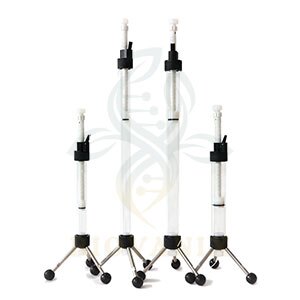
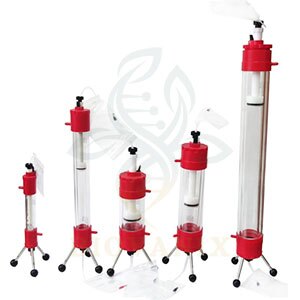
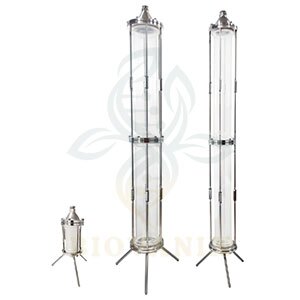
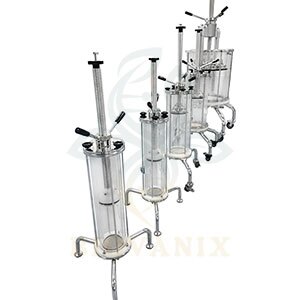
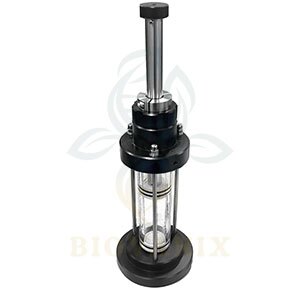
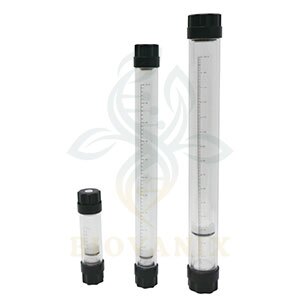
Glass Chromatography Column
The manufacturing of high-pressure plunger pumps demands a sophisticated integration of advanced material science and ultra-precision engineering to achieve consistent fluid delivery under extreme conditions. Success relies on the use of chemically inert materials—such as sapphire and ceramic for plungers and 316L stainless steel and PEEK for pump heads—processed to achieve a mirror-like surface finish (Ra<0.8). Furthermore, achieving micron-level dimensional tolerances, ensuring perfect coaxiality during assembly in cleanroom environments, and conducting rigorous high-pressure pulsation testing are essential to guarantee long-term stability and flow precision in high-performance liquid chromatography and chemical synthesis applications.
We develop the liquid pump based on different applications.
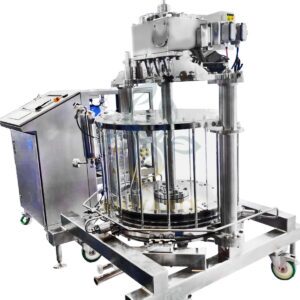
Hardware
The manufacturing of high-pressure plunger pumps demands a sophisticated integration of advanced material science and ultra-precision engineering to achieve consistent fluid delivery under extreme conditions. Success relies on the use of chemically inert materials—such as sapphire and ceramic for plungers and 316L stainless steel and PEEK for pump heads—processed to achieve a mirror-like surface finish (Ra<0.8). Furthermore, achieving micron-level dimensional tolerances, ensuring perfect coaxiality during assembly in cleanroom environments, and conducting rigorous high-pressure pulsation testing are essential to guarantee long-term stability and flow precision in high-performance liquid chromatography and chemical synthesis applications.
We develop the hardware based on different applications.
 English
  العربية
  Français
  Deutsch (Sie)
  한국어
한국어  Русский
  Español de Argentina