
올리고 dT(25) 친화성 크로마토그래피 수지
바이오바닉스 올리고 dT(25) 친화성 수지 이것은 체외 전사(IVT) 제조 공정에서 mRNA의 정제 및 분리를 위해 설계된 최첨단 솔루션입니다. 이 고급 수지는 폴리아데닐화(polyA) 꼬리를 통해 mRNA를 선택적으로 포집하여 효소 및 플라스미드 DNA와 같은 전사 반응의 다른 구성 요소와 효과적으로 분리합니다.
대규모 하류 정제에 완벽하게 적합하며, 바이오바닉스 올리고 dT(25) 친화성 수지 백신 및 유전자 치료 애플리케이션의 핵심 동력으로, 현대 바이오 제약 제조의 요구를 충족시키는 탁월한 선택성과 용량을 제공합니다.
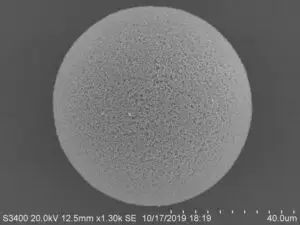
50 μm
입자 크기
200 nm
모공 크기
pH 2–13
Stability Range
최대 압력
Stability Range
Product Features
Engineered for High-Performance mRNA Purification
Biovanix Oligo dT(25) Affinity Resin combines selective polyA capture with a rigid PS-DVB matrix for reliable results at any scale.
선택적 mRNA 포집
✔ PolyA Tail Specificity: 플라스미드 DNA 및 기타 IVT 구성 요소를 효과적으로 제거하기 위해 mRNA를 높은 선택성으로 표적화합니다.
✔Simple Salt and Water Elution: 복잡성을 최소화한 간소화된 정제 공정.
2. 확장 가능한 솔루션
✔ 탁월한 확장성 실험실 규모에서 대규모 생산으로의 원활한 전환을 위해 설계되었습니다.
✔ High Capacity: 고수율 mRNA 제조 요구 사항을 충족합니다.
3. 비동물 유래
✔ 합성 제조 공정 바이오바닉스 올리고 리간드는 동물 성분이 포함되어 있지 않아 규제 요구 사항 및 윤리적 기준을 준수합니다.
4. 간소화된 워크플로
✔ 단순화 여러 정제 단계를 없애 효율성을 극대화하고 후처리 복잡성을 줄입니다.
✔ 일관된 성능 다양한 규모와 생산 배치에 걸쳐 신뢰할 수 있는 결과.
How It Works
Simple 4-Step mRNA Purification Workflow
From crude IVT mixture to purified mRNA in a single affinity capture step — no complex multi-step protocols required.
①
Equilibrate
Prepare column with high-salt binding buffer (e.g., 0.5 M NaCl)
②
Load & Bind
Apply IVT mixture; polyA-tailed mRNA binds to poly(dT) ligands
③
Wash
Remove impurities (enzymes, pDNA, nucleotides) in flow-through
④
Elute
Release purified mRNA with water or low-salt buffer
Technical Specifications
Product Specifications
Comprehensive technical data for method development and process validation.
| 특성 | 설명 |
| 지원 행렬 | 가교 폴리(스타이렌-디비닐벤젠) |
| 평균 입자 크기 | 50 마이크로미터 |
| 평균 기공 크기 | 200 nm |
| 표면 기능 | 폴리(dT) 25 상위 염기 서열에 독점적인 링커 |
| 리간드 밀도 | 0.3 umol/ml |
| 기계적 내성 | 70 바 (1,000 psi; 7 MPa) |
| 열 안정성 | 필요시 65°C에서 시료 변성 가능 |
| pH 범위 | 2-13 |
| 이온 강도 범위 | 0~5 M, 모든 일반 염 |
| 내화학성 | mRNA 정제에 일반적으로 사용되는 시약으로는 0.5 M NaOH, 2 M MgCl₂, 20 mM EDTA 등이 있습니다. 물, 0~100% 알코올, 아세토니트릴, 2 M 초산, 1 M HCl 및 기타 일반적인 유기 용매도 포함됩니다. |
| 스토리지 | 18-20% 에탄올 |
화학 및 내열성
| pH 범위 | 2–13 |
| 이온 강도 범위 | 0~5 M, 모든 일반 염 |
| 완충 첨가제 | mRNA 정제용 일반적인 시약으로는 0.5 M NaOH, 2 mM MgCl2, 20 mM EDTA가 있습니다. 강산화제(차아염소산염 등), 산화산(질산 등), 강환원제(아황산염 등), 아세톤, THF 또는 벤질 알코올과 같은 물질에 노출시키지 마십시오. |
| 용매 | 물, 0~100% 알코올, 아세토니트릴, 2 M 초산, 1 M 염산 및 기타 일반적인 유기 용매. 강한 산화제(차아염소산염 등), 산화성 산(질산 등), 강한 환원제(아황산염 등), 아세톤, 벤질 알코올 또는 THF에 노출시키지 마십시오. |
| 유량 | 성능에 따라 유량을 조절하십시오. 상한 압력 제한을 초과하지 마십시오. |
혜택 요약
Why Biovanix Oligo dT(25) Resin
Designed to maximize purity, simplify workflows, and reduce total cost of ownership.
⚡
고효율
빠르고 효율적인 mRNA 정제.
📈
확장 가능한 프로세스
대규모 생산에 쉽게 적용 가능.
🛡️
규정 준수
동물 유래가 아닌 합성 제조 공정.
💰
비용 효율적인
간소화된 워크플로는 운영 복잡성과 비용을 줄입니다.
애플리케이션
Built for the mRNA Revolution
From vaccine development to gene therapy manufacturing, Biovanix Oligo dT(25) Resin supports the full spectrum of mRNA applications.
백신 생산
mRNA 백신 효율적인 정제.
유전자 치료
치료 용도 mRNA의 확장 가능한 생산.
IVT 제조
전사 반응 혼합물에서 mRNA를 간소화된 분리.
플라스미드 DNA 제거
플라스미드 DNA 및 기타 IVT 구성 요소의 효과적인 제거.
Why Choose Biovanix
Your Trusted Partner in mRNA Purification
① Efficient mRNA Purification
불순물을 최소화하여 고순도 mRNA를 획득하십시오.
② Cost-Effective
운영 복잡성 감소와 생산성 향상은 전반적인 생산 비용을 절감합니다.
③ Regulatory Compliance
동물 유래 성분을 배제하고 합성 방식으로 제조하여 글로벌 표준 준수를 보장합니다.
④ Versatile Application
백신, 유전자 치료제 및 기타 바이오 의약품에 사용되는 광범위한 mRNA 구성물에 이상적입니다.
Frequently Asked Questions
Oligo dT(25) Resin FAQ
Common questions about mRNA purification with Oligo dT(25) affinity chromatography.
What is Oligo dT(25) affinity chromatography resin and how does it work?
Oligo dT(25) affinity chromatography resin is a specialized chromatography medium functionalized with poly(deoxythymidine) 25-mer ligands attached to a solid support matrix. It works through complementary A-T base pairing: the poly(dT) ligands on the resin selectively bind to the polyadenylated (polyA) tail of mRNA molecules. When an IVT (in vitro transcription) mixture is loaded onto the column under high-salt conditions, mRNA is captured while impurities such as enzymes, plasmid DNA, and unincorporated nucleotides pass through. Elution is achieved with water or low-salt buffer, releasing the purified mRNA.
What is the principle behind mRNA purification using oligo dT affinity chromatography?
The purification principle relies on specific Watson-Crick A-T base pairing between the poly(dT) 25-mer ligand immobilized on the resin and the polyA tail present on mature mRNA. Under high ionic strength conditions (typically 0.5 M NaCl), electrostatic shielding stabilizes the hybridization between poly(dT) and polyA. The mRNA binds selectively to the resin while process impurities flow through. Elution is performed under low-ionic-strength conditions (water or dilute buffer), which destabilizes the hybrid and releases purified mRNA in a single chromatographic step.
What types of mRNA can be purified with Oligo dT(25) resin?
Oligo dT(25) resin can purify any polyadenylated mRNA produced through in vitro transcription (IVT), including mRNA constructs for vaccines (such as infectious disease vaccines), gene therapy mRNAs (such as those encoding therapeutic proteins or gene editing components), and research-grade mRNAs of various lengths. The resin is compatible with mRNA constructs ranging from short transcripts to several thousand nucleotides in length, as long as they contain a polyA tail.
What is the binding capacity of Oligo dT(25) resin?
The binding capacity of Oligo dT(25) resin depends on the mRNA construct length, loading conditions, and the specific product formulation. Generally, affinity resins with poly(dT) ligands offer high dynamic binding capacity suitable for preparative-scale mRNA purification. Smaller mRNA constructs tend to achieve higher binding capacity per mL of resin due to reduced steric hindrance. For specific capacity data for your mRNA construct, contact the Biovanix technical team for application-specific recommendations.
What are the advantages of PS-DVB matrix vs. agarose for mRNA purification?
Poly(styrene-divinylbenzene) (PS-DVB) matrices offer several advantages over traditional agarose gels for mRNA purification: (1) Higher mechanical strength — PS-DVB beads are rigid, enabling higher flow rates and pressure tolerance (up to 70 bar for Biovanix resin) without bed compression; (2) Broader chemical compatibility — stable across pH 2–13 and resistant to organic solvents, enabling aggressive cleaning-in-place (CIP) with NaOH; (3) Longer resin lifetime — the rigid polymer backbone does not compress or degrade over repeated cycles; (4) Better scalability — linear pressure-flow behavior allows consistent performance from lab to production scale; (5) No risk of gel compression artifacts during scale-up.
How do I pack and use Oligo dT(25) resin in my chromatography system?
General workflow: (1) Equilibrate the column with binding buffer (high-salt buffer, e.g., 0.5 M NaCl) to prepare the resin for mRNA capture; (2) Load the IVT reaction mixture onto the column — the mRNA polyA tail binds to the poly(dT) ligands while impurities flow through; (3) Wash the column with binding buffer or a moderate-salt wash buffer to remove residual impurities; (4) Elute purified mRNA with water or low-salt buffer (e.g., 10 mM Tris-HCl); (5) Clean and regenerate the column with appropriate CIP solution (e.g., 0.1–0.5 M NaOH) for reuse. Always adjust flow rate to stay within the pressure limit (70 bar maximum for Biovanix resin). For denaturing secondary structures, samples can be heated to 65°C during processing.
What flow rate and pressure should I use with Oligo dT(25) resin?
Biovanix Oligo dT(25) resin has a maximum mechanical resistance of 70 bar (1,000 psi / 7 MPa). The flow rate should be adjusted based on your specific application and column dimensions, ensuring that backpressure does not exceed this limit. The 50 μm average particle size allows efficient mass transfer at moderate to high linear flow rates. Start at a conservative flow rate during method development and optimize based on binding efficiency and recovery. The rigid PS-DVB matrix maintains stable bed volume across flow rate changes, providing consistent performance.
Can I reuse the Oligo dT(25) resin and how do I clean it?
Yes, Oligo dT(25) resin can be reused for multiple purification cycles with proper cleaning and storage. Cleaning-in-place (CIP) is typically performed using 0.1–0.5 M NaOH, which effectively removes residual nucleic acids and contaminants. The resin’s broad pH stability (2–13) and chemical resistance support stringent cleaning protocols. After CIP, re-equilibrate the column with binding buffer before the next use. Store the resin in 18–20% ethanol at 2–8°C when not in use. Do not freeze. Resin lifetime depends on the application, cleaning protocol, and feed material quality.
What buffer conditions are recommended for mRNA binding and elution?
For mRNA binding (capture): use a high-salt buffer such as 0.5 M NaCl with an appropriate buffer component (e.g., 10 mM Tris-HCl, pH 7.5). The high ionic strength provides electrostatic shielding that stabilizes the A-T hybridization between poly(dT) ligands and the mRNA polyA tail. For washing: use the same high-salt binding buffer or a moderately reduced salt concentration. For elution: use deionized water or a low-salt buffer (e.g., 10 mM Tris-HCl without NaCl) to destabilize the hybrid and release purified mRNA. The resin also allows sample denaturing at 65°C if needed to eliminate undesired higher-order RNA structures.
How does Oligo dT(25) resin remove plasmid DNA and other IVT impurities?
The selectivity of Oligo dT(25) resin is based on the specific A-T base pairing between the poly(dT) ligands and the polyA tail of mRNA. Only polyadenylated mRNA molecules bind to the resin. Plasmid DNA (which lacks a polyA tail), RNA polymerase enzymes, unincorporated nucleotides, short abortive transcripts, and buffer components do not bind and are removed in the flow-through and wash fractions. This single-step affinity capture effectively separates full-length mRNA from the major IVT process impurities, significantly reducing downstream processing complexity.
Can Oligo dT(25) resin be used for continuous or automated mRNA purification?
Yes, Oligo dT(25) resin is compatible with standard chromatography systems and can be adapted for automated and continuous processing workflows. The rigid PS-DVB matrix provides consistent pressure-flow behavior, making it suitable for use on automated chromatography platforms. The simple salt-and-water elution workflow minimizes buffer exchange requirements. For process development and screening, smaller column formats can be used to optimize conditions before scaling to larger automated systems. The linear scalability of the PS-DVB matrix ensures that conditions optimized at small scale translate directly to production scale.
What is the shelf life and storage condition for Oligo dT(25) resin?
Biovanix Oligo dT(25) resin should be stored in 18–20% ethanol solution. The recommended storage temperature is 2–8°C (refrigerated). Do not freeze the resin, as freezing may damage the bead structure. When properly stored, the resin maintains its performance characteristics over extended periods. Before use, ensure the resin is at room temperature and thoroughly equilibrated with binding buffer. Refer to the product certificate of analysis for specific shelf-life information for your lot.
고객 후기
Trusted by Biopharma Professionals
“Biovanix InertShell 크로마토그래피 레진은 바이러스 정제 공정을 혁신적으로 변화시켰습니다. 이중 기능성과 높은 선택성 덕분에 수율과 순도가 크게 향상되어 시험에 필수적인 도구가 되었습니다.”
- 알렉스, 개발자, AA 바이오파마
관련 제품
Complete Chromatography Solutions from Biovanix
Pair Oligo dT(25) Resin with our full range of chromatography hardware, media, and systems.
아가로스 크로마토그래피 미디어
High-performance agarose-based resins for protein and biomolecule purification
Supermacroporous Polymer Microspheres
Rigid PS-DVB microspheres for high-flow chromatography applications
Silica Gel Packing Material
Ultra-pure silica gel for HPLC and flash chromatography
사전 포장 HPLC 컬럼
Ready-to-use analytical and preparative columns
Empty HPLC Column Tubing
Stainless steel and PEEK empty columns for self-packing
Isoplex 컬럼 패커
Precision column packing system for reproducible results
유리 크로마토그래피 컬럼
Double-layer glass columns for low-pressure purification
탕류 여과 시스템
Automated TFF for concentration and buffer exchange
Ready to Optimize Your mRNA Purification?
Contact our application scientists for personalized technical support, sample testing, or volume pricing.
 English
  العربية
  Français
  Deutsch (Sie)
  한국어
한국어  Русский
  Español de Argentina