
Oligo dT(25) Affinitätschromatographie-Harz
Biovanix Oligo dT(25) Affinitätsharz ist eine hochmoderne Lösung für die Reinigung und Isolierung von mRNA aus In-vitro-Transkriptionsverfahren (IVT). Dieses fortschrittliche Harz fängt die mRNA selektiv über ihren polyadenylierten (polyA) Schwanz ab und trennt sie effektiv von anderen Komponenten der Transkriptionsreaktion, wie Enzymen und Plasmid-DNA.
Perfekt geeignet für die nachgeschaltete Aufreinigung in großem Maßstab, Biovanix Oligo dT(25) Affinitätsharz ist ein Schlüsselfaktor für Impfstoff- und Gentherapieanwendungen und bietet eine unübertroffene Selektivität und Kapazität, um die Anforderungen der modernen biopharmazeutischen Herstellung zu erfüllen.
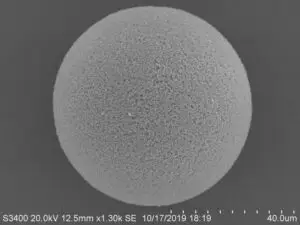
50 μm
Partikelgröße
200 nm
Porengröße
pH 2–13
Stability Range
Maximaler Druck
Stability Range
Produktmerkmale
Engineered for High-Performance mRNA Purification
Biovanix Oligo dT(25) Affinity Resin combines selective polyA capture with a rigid PS-DVB matrix for reliable results at any scale.
1. Selektiver mRNA-Einfang
✔ PolyA Tail Specificity: Zielt mit hoher Selektivität auf mRNA und gewährleistet eine effektive Entfernung von Plasmid-DNA und anderen IVT-Komponenten.
✔Simple Salt and Water Elution: Rationalisierter Reinigungsprozess mit minimaler Komplexität.
2. Skalierbare Lösung
✔ Ausgezeichnete Skalierbarkeit: Konzipiert für den nahtlosen Übergang vom Labormaßstab zur Produktion im großen Maßstab.
✔ High Capacity: Erfüllt die Anforderungen der mRNA-Herstellung mit hohem Ertrag.
3. Nicht aus Tieren gewonnen
✔ Synthetischer Herstellungsprozess: Die Oligoliganden von Biovanix sind frei von tierischen Bestandteilen, wodurch die Einhaltung gesetzlicher Vorschriften und ethischer Standards gewährleistet ist.
4. Vereinfachter Arbeitsablauf
✔ Geringere Komplexität: Macht mehrere Reinigungsschritte überflüssig, maximiert die Effizienz und reduziert die Komplexität der nachgeschalteten Prozesse.
✔ Konsistente Leistung: Verlässliche Ergebnisse über verschiedene Maßstäbe und Produktionschargen hinweg.
How It Works
Simple 4-Step mRNA Purification Workflow
From crude IVT mixture to purified mRNA in a single affinity capture step — no complex multi-step protocols required.
①
Equilibrate
Prepare column with high-salt binding buffer (e.g., 0.5 M NaCl)
②
Load & Bind
Apply IVT mixture; polyA-tailed mRNA binds to poly(dT) ligands
③
Wash
Remove impurities (enzymes, pDNA, nucleotides) in flow-through
④
Elute
Release purified mRNA with water or low-salt buffer
Technical Specifications
Product Specifications
Comprehensive technical data for method development and process validation.
| Charakteristisch | Beschreibung |
| Support-Matrix | Vernetztes Poly(styrol-Divinylbenzol) |
| Durchschnittliche Partikelgröße | 50 um |
| Durchschnittliche Porengröße | 200 nm |
| Oberflächenfunktionalität | Poly(dT) 25mer mit proprietärem Linker |
| Ligandenkonzentration | 0,3 umol/ml |
| Mechanische Beständigkeit | 70 bar (1.000 psi; 7 MPa) |
| Thermische Stabilität | ermöglicht bei Bedarf die Denaturierung der Probe bei 65°C |
| pH-Bereich | 2-13 |
| Bereich der Ionenstärke | 0 bis 5 M, alle gängigen Salze |
| Chemische Beständigkeit | Übliche Mittel für die mRNA-Reinigung sind 0,5 M NaOH, 2 M MgCl2, 20 mM EDTA. Wasser, 0 bis 100% Alkohol, Acetonitril, 2 M Essigsäure, 1 M HCl und andere gängige organische Lösungsmittel |
| Lagerung | 18-20% Ethanol |
Chemische und thermische Beständigkeit
| pH-Bereich | 2-13 |
| Bereich der Ionenstärke | 0 bis 5 M, alle gängigen Salze |
| Puffer Zusatzstoffe | Übliche Mittel für die mRNA-Reinigung sind 0,5 M NaOH, 2 MMgCl2, 20 mM EDTA. Nicht mit starken Oxidationsmitteln (wie Hypochlorit), oxidierenden Säuren (wie Salpetersäure), starken Reduktionsmitteln (wie Sulfit), Aceton, THF oder Benzylalkohol in Berührung bringen. |
| Lösungsmittel | Wasser, 0 bis 100% Alkohol, Acetonitril, 2 M Essigsäure, 1 M HCl und andere übliche organische Lösungsmittel. Nicht mit starken Oxidationsmitteln (wie Hypochlorit), oxidierenden Säuren (wie Salpetersäure), starken Reduktionsmitteln (wie Sulfit), Aceton, Benzylalkohol oder THF in Berührung bringen. |
| Durchflussmenge | Durchflussmenge je nach Leistung anpassen. Obere Druckgrenzen nicht überschreiten. |
Vorteile auf einen Blick
Why Biovanix Oligo dT(25) Resin
Designed to maximize purity, simplify workflows, and reduce total cost of ownership.
⚡
Hoher Wirkungsgrad
Schnelle und effiziente mRNA-Aufreinigung.
📈
Skalierbarer Prozess
Leicht anpassbar an die Großserienfertigung.
🛡️
Einhaltung von Vorschriften
Synthetisches Herstellungsverfahren ohne Tierversuche.
💰
Kostengünstig
Vereinfachte Arbeitsabläufe reduzieren die betriebliche Komplexität und die Kosten.
Anwendungen
Built for the mRNA Revolution
From vaccine development to gene therapy manufacturing, Biovanix Oligo dT(25) Resin supports the full spectrum of mRNA applications.
Impfstoffproduktion
Effiziente Reinigung von mRNA-Impfstoffen.
Gentherapie
Skalierbare Produktion von mRNA für therapeutische Anwendungen.
IVT Fertigung
Rationalisierte Isolierung von mRNA aus Transkriptionsreaktionsmischungen.
Entfernung von Plasmid-DNA
Wirksame Beseitigung von Plasmid-DNA und anderen IVT-Bestandteilen.
Why Choose Biovanix
Your Trusted Partner in mRNA Purification
① Efficient mRNA Purification
Erzielen Sie hochreine mRNA mit minimalen Verunreinigungen.
② Cost-Effective
Geringere betriebliche Komplexität und höhere Produktivität senken die Gesamtproduktionskosten.
③ Regulatory Compliance
Die tierversuchsfreie und synthetische Herstellung gewährleistet die Einhaltung globaler Standards.
④ Versatile Application
Ideal für eine breite Palette von mRNA-Konstrukten, die in Impfstoffen, Gentherapien und anderen biopharmazeutischen Produkten verwendet werden.
Frequently Asked Questions
Oligo dT(25) Resin FAQ
Common questions about mRNA purification with Oligo dT(25) affinity chromatography.
What is Oligo dT(25) affinity chromatography resin and how does it work?
Oligo dT(25) affinity chromatography resin is a specialized chromatography medium functionalized with poly(deoxythymidine) 25-mer ligands attached to a solid support matrix. It works through complementary A-T base pairing: the poly(dT) ligands on the resin selectively bind to the polyadenylated (polyA) tail of mRNA molecules. When an IVT (in vitro transcription) mixture is loaded onto the column under high-salt conditions, mRNA is captured while impurities such as enzymes, plasmid DNA, and unincorporated nucleotides pass through. Elution is achieved with water or low-salt buffer, releasing the purified mRNA.
What is the principle behind mRNA purification using oligo dT affinity chromatography?
The purification principle relies on specific Watson-Crick A-T base pairing between the poly(dT) 25-mer ligand immobilized on the resin and the polyA tail present on mature mRNA. Under high ionic strength conditions (typically 0.5 M NaCl), electrostatic shielding stabilizes the hybridization between poly(dT) and polyA. The mRNA binds selectively to the resin while process impurities flow through. Elution is performed under low-ionic-strength conditions (water or dilute buffer), which destabilizes the hybrid and releases purified mRNA in a single chromatographic step.
What types of mRNA can be purified with Oligo dT(25) resin?
Oligo dT(25) resin can purify any polyadenylated mRNA produced through in vitro transcription (IVT), including mRNA constructs for vaccines (such as infectious disease vaccines), gene therapy mRNAs (such as those encoding therapeutic proteins or gene editing components), and research-grade mRNAs of various lengths. The resin is compatible with mRNA constructs ranging from short transcripts to several thousand nucleotides in length, as long as they contain a polyA tail.
What is the binding capacity of Oligo dT(25) resin?
The binding capacity of Oligo dT(25) resin depends on the mRNA construct length, loading conditions, and the specific product formulation. Generally, affinity resins with poly(dT) ligands offer high dynamic binding capacity suitable for preparative-scale mRNA purification. Smaller mRNA constructs tend to achieve higher binding capacity per mL of resin due to reduced steric hindrance. For specific capacity data for your mRNA construct, contact the Biovanix technical team for application-specific recommendations.
What are the advantages of PS-DVB matrix vs. agarose for mRNA purification?
Poly(styrene-divinylbenzene) (PS-DVB) matrices offer several advantages over traditional agarose gels for mRNA purification: (1) Higher mechanical strength — PS-DVB beads are rigid, enabling higher flow rates and pressure tolerance (up to 70 bar for Biovanix resin) without bed compression; (2) Broader chemical compatibility — stable across pH 2–13 and resistant to organic solvents, enabling aggressive cleaning-in-place (CIP) with NaOH; (3) Longer resin lifetime — the rigid polymer backbone does not compress or degrade over repeated cycles; (4) Better scalability — linear pressure-flow behavior allows consistent performance from lab to production scale; (5) No risk of gel compression artifacts during scale-up.
How do I pack and use Oligo dT(25) resin in my chromatography system?
General workflow: (1) Equilibrate the column with binding buffer (high-salt buffer, e.g., 0.5 M NaCl) to prepare the resin for mRNA capture; (2) Load the IVT reaction mixture onto the column — the mRNA polyA tail binds to the poly(dT) ligands while impurities flow through; (3) Wash the column with binding buffer or a moderate-salt wash buffer to remove residual impurities; (4) Elute purified mRNA with water or low-salt buffer (e.g., 10 mM Tris-HCl); (5) Clean and regenerate the column with appropriate CIP solution (e.g., 0.1–0.5 M NaOH) for reuse. Always adjust flow rate to stay within the pressure limit (70 bar maximum for Biovanix resin). For denaturing secondary structures, samples can be heated to 65°C during processing.
What flow rate and pressure should I use with Oligo dT(25) resin?
Biovanix Oligo dT(25) resin has a maximum mechanical resistance of 70 bar (1,000 psi / 7 MPa). The flow rate should be adjusted based on your specific application and column dimensions, ensuring that backpressure does not exceed this limit. The 50 μm average particle size allows efficient mass transfer at moderate to high linear flow rates. Start at a conservative flow rate during method development and optimize based on binding efficiency and recovery. The rigid PS-DVB matrix maintains stable bed volume across flow rate changes, providing consistent performance.
Can I reuse the Oligo dT(25) resin and how do I clean it?
Yes, Oligo dT(25) resin can be reused for multiple purification cycles with proper cleaning and storage. Cleaning-in-place (CIP) is typically performed using 0.1–0.5 M NaOH, which effectively removes residual nucleic acids and contaminants. The resin’s broad pH stability (2–13) and chemical resistance support stringent cleaning protocols. After CIP, re-equilibrate the column with binding buffer before the next use. Store the resin in 18–20% ethanol at 2–8°C when not in use. Do not freeze. Resin lifetime depends on the application, cleaning protocol, and feed material quality.
What buffer conditions are recommended for mRNA binding and elution?
For mRNA binding (capture): use a high-salt buffer such as 0.5 M NaCl with an appropriate buffer component (e.g., 10 mM Tris-HCl, pH 7.5). The high ionic strength provides electrostatic shielding that stabilizes the A-T hybridization between poly(dT) ligands and the mRNA polyA tail. For washing: use the same high-salt binding buffer or a moderately reduced salt concentration. For elution: use deionized water or a low-salt buffer (e.g., 10 mM Tris-HCl without NaCl) to destabilize the hybrid and release purified mRNA. The resin also allows sample denaturing at 65°C if needed to eliminate undesired higher-order RNA structures.
How does Oligo dT(25) resin remove plasmid DNA and other IVT impurities?
The selectivity of Oligo dT(25) resin is based on the specific A-T base pairing between the poly(dT) ligands and the polyA tail of mRNA. Only polyadenylated mRNA molecules bind to the resin. Plasmid DNA (which lacks a polyA tail), RNA polymerase enzymes, unincorporated nucleotides, short abortive transcripts, and buffer components do not bind and are removed in the flow-through and wash fractions. This single-step affinity capture effectively separates full-length mRNA from the major IVT process impurities, significantly reducing downstream processing complexity.
Can Oligo dT(25) resin be used for continuous or automated mRNA purification?
Yes, Oligo dT(25) resin is compatible with standard chromatography systems and can be adapted for automated and continuous processing workflows. The rigid PS-DVB matrix provides consistent pressure-flow behavior, making it suitable for use on automated chromatography platforms. The simple salt-and-water elution workflow minimizes buffer exchange requirements. For process development and screening, smaller column formats can be used to optimize conditions before scaling to larger automated systems. The linear scalability of the PS-DVB matrix ensures that conditions optimized at small scale translate directly to production scale.
What is the shelf life and storage condition for Oligo dT(25) resin?
Biovanix Oligo dT(25) resin should be stored in 18–20% ethanol solution. The recommended storage temperature is 2–8°C (refrigerated). Do not freeze the resin, as freezing may damage the bead structure. When properly stored, the resin maintains its performance characteristics over extended periods. Before use, ensure the resin is at room temperature and thoroughly equilibrated with binding buffer. Refer to the product certificate of analysis for specific shelf-life information for your lot.
Erfahrungsbericht eines Kunden
Trusted by Biopharma Professionals
"Biovanix InertShell Chromatography Resin hat unseren Virusaufreinigungsprozess verändert. Die Doppelfunktionalität und die hohe Selektivität haben unsere Ausbeuten und Reinheitsgrade deutlich verbessert und machen es zu einem unverzichtbaren Werkzeug bei unseren Tests."
- Alex, Entwickler, AA Biopharma
Verwandte Produkte
Complete Chromatography Solutions from Biovanix
Pair Oligo dT(25) Resin with our full range of chromatography hardware, media, and systems.
Agarose-Chromatographie-Medien
High-performance agarose-based resins for protein and biomolecule purification
Supermacroporous Polymer Microspheres
Rigid PS-DVB microspheres for high-flow chromatography applications
Silica Gel Packing Material
Ultra-pure silica gel for HPLC and flash chromatography
Vorgefüllte HPLC-Säulen
Ready-to-use analytical and preparative columns
Empty HPLC Column Tubing
Stainless steel and PEEK empty columns for self-packing
Isoplex Column Packer
Precision column packing system for reproducible results
Glas-Chromatographie-Säule
Double-layer glass columns for low-pressure purification
Tangentialflussfiltrationssystem
Automated TFF for concentration and buffer exchange
Ready to Optimize Your mRNA Purification?
Contact our application scientists for personalized technical support, sample testing, or volume pricing.
 English
  العربية
  Français
  Deutsch (Sie)
  한국어
한국어  Русский
  Español de Argentina