
Silica Gel Chromatography Packing Material
Biovanix silica gel chromatography packing materials provide high-purity spherical silica stationary phases — C18, C8, C4, Phenyl, SiO2, NH2, CN and Diol — with 5–50 μm particle sizes for analytical to preparative HPLC, flash chromatography and purification scale-up.
8 Bonded Phases
5–50 μm Particle Sizes
Analytical → Preparative Scale
High Coverage & End-Capping
Overview
Stationary Phases at the Heart of Chromatographic Separation
As the heart of chromatographic separation, Biovanix stationary phases include silica-based, agarose-based, and PSDVB/PMMA polymer-based media, offering a full range from analytical to preparative scales. With advanced surface modification technology and precise particle size control, our media excel in biopharmaceutical purification, natural product isolation, and chiral separation. Explore our Media Selection Guide to quickly find the optimal solution for your application.
Matrice
Spherical silica gel
High-purity, narrow particle size distribution
Bonded Phases
8 phases
C18 · C8 · C4 · Phenyl · SiO2 · NH2 · CN · Diol
Taille des particules
5 / 10 / 15 / 20 / 30 / 50 μm
Analytical HPLC to flash & prep columns
Taille des pores
100/120/300 Å
Consistent base across all phases
Surface
100/300 m²/g
High loading capacity
Gamme de pH
pH1–12
Bonded phase stability window
Product Range
Silica Gel Packing Materials: 8 Phases, One Consistent Base
All seven bonded phases share the same 100 Å / 300 m²/g spherical silica base and are available in particle sizes from 5 to 50 μm — so a method developed on an analytical column transfers directly to preparative scale.
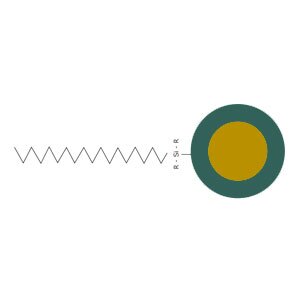
Octadecyl-bonded phase with high surface coverage and exhaustive end-capping for minimal undesired silanol activity; the most universal reversed-phase choice for analytes with low to high hydrophobicity. Price range $850–$9,000 depending on grade and package.
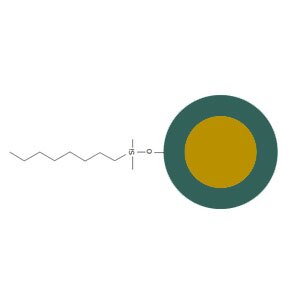
Octyl-bonded phase with high surface coverage and exhaustive end-capping for minimal undesired silanol activity; similar selectivity to C18 with weaker retention and faster runs for analytes with low to high hydrophobicity.
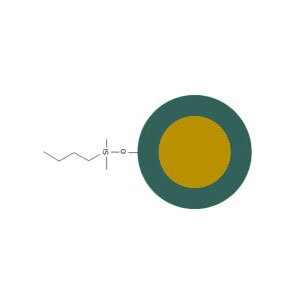
Butyl-bonded phase with high surface coverage and exhaustive end-capping for minimal undesired silanol activity; gentlest retention of the alkyl series, well suited to proteins, peptides and other large hydrophobic analytes.
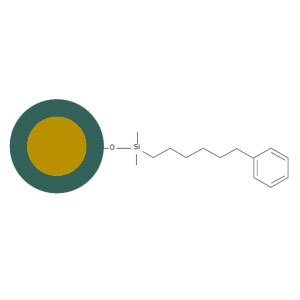
Phenyl-bonded phase with high surface coverage and exhaustive end-capping for minimal undesired silanol activity; adds π–π selectivity for aromatics and positional isomers across low to high hydrophobicity.

Unmodified high-purity spherical bare silica for classic normal-phase separations and sample cleanup, where polar surface silanols retain the most polar analytes longest.
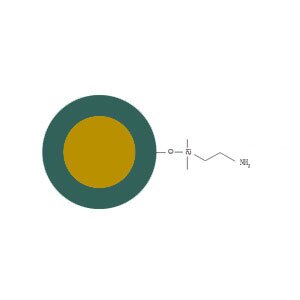
Amino-bonded polar phase for normal-phase and HILIC modes — widely used for sugars and carbohydrates, and operable in weak anion-exchange mode for acidic analytes.
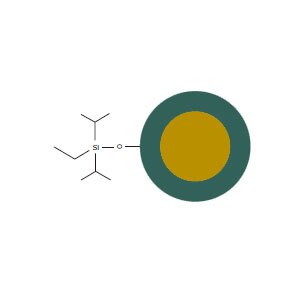
Cyano-bonded medium-polarity phase usable in both normal- and reversed-phase mode; ideal for compounds with small polarity differences that are over-retained on bare silica or C18.
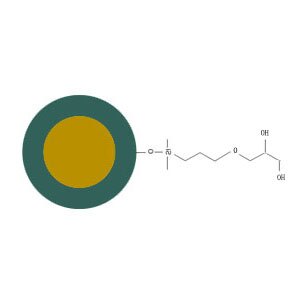
Diol-bonded phase providing a highly inert polar surface for HILIC separations, aqueous size-exclusion and protein separations with low non-specific adsorption.
Spécifications
Full Specification Comparison Table
Every bonded phase is built on the same spherical silica base — compare carbon load, mode and key parameters side by side.
| Phase | Mode | Carbon Load | Taille des particules | Taille des pores | Surface | Gamme de pH | Product Page |
|---|---|---|---|---|---|---|---|
C18 Gel de silice | Reversed-phase | 16% | 5/10/15/20/30/50 μm | 100 Å | 300 m²/g | 2–8 | View C18 → |
C8 Gel de silice | Reversed-phase | 12% | 5/10/15/20/30/50 μm | 100 Å | 300 m²/g | 2–8 | View C8 → |
C4 Gel de silice | Reversed-phase | 3% | 5/10/15/20/30/50 μm | 100 Å | 300 m²/g | 2–8 | View C4 → |
| Gel de silice phénolique | Reversed-phase | 8% | 5/10/15/20/30/50 μm | 100 Å | 300 m²/g | 2–8 | View Phenyl → |
| SiO2 Gel de silice | Normal-phase | — | 5/10/15/20/30/50 μm | 100 Å | 300 m²/g | 2–8 | View SiO2 → |
| NH2/Amino Silica-gel | Normal-phase / HILIC | 4% | 5/10/15/20/30/50 μm | 100 Å | 300 m²/g | 2–8 | View NH2 → |
| CN/Cyano Silica-gel | Normal / Reversed-phase | 7% | 5/10/15/20/30/50 μm | 100 Å | 300 m²/g | 2–8 | View CN → |
| Silice-gel diol | Normal-phase / HILIC | 8% | 5/10/15/20/30/50 μm | 100 Å | 300 m²/g | 2–8 | View Diol → |
Technology
Reversed-phase vs Normal-phase: Two Separation Modes
Choosing the right mode is the first decision in method development. The rule is simple: in reversed phase the least polar compound is retained longest; in normal phase the most polar compound is retained longest.
Reversed-phase Chromatography (RPC)
~75% of all HPLC methods — the default starting point for most samples.
Stationary phase: non-polar bonded silicas — C18, C8, C4, Phenyl
Mobile phase: polar — water / buffer with methanol or acetonitrile
Retention rule: more hydrophobic analytes retain longer
Strengths: robust methods, wide solvent choice, excellent reproducibility, easy gradient elution
Biovanix RP phases: C18 · C8 · C4 · Phenyl
Normal-phase Chromatography (NPC)
For highly polar compounds, lipid-soluble samples and isomer purification.
Stationary phase: polar — bare SiO2, NH2, CN, Diol
Mobile phase: non-polar — hexane/heptane with ethyl acetate or dichloromethane
Retention rule: more polar analytes retain longer
Strengths: unique selectivity for polar and structural isomers; NH2 and Diol also support HILIC mode with high-organic mobile phases
Biovanix NP phases: SiO2 · NH2 · CN · Diol
Media Selection Guide
How to Choose the Right Silica Phase
Match the phase to your analyte’s polarity, molecular size and separation goal — then match the particle size to your column format.
| Your sample or separation goal | Recommended phase | Why |
|---|---|---|
| General-purpose small molecules; broad hydrophobicity range; first-choice HPLC method | C18 | Highest carbon load (16%) and retention; the most universal reversed-phase workhorse. |
| Moderate hydrophobicity; C18 retains too strongly or runs too long | C8 | Similar selectivity to C18 with shorter analysis times and lower solvent consumption. |
| Proteins, peptides and other large hydrophobic biomolecules | C4 | Low carbon load (3%) gives gentle retention and better recovery of large molecules. |
| Aromatic compounds, positional isomers; co-elution on C18/C8 | Phényle | π–π and dipole interactions provide orthogonal selectivity to alkyl phases. |
| Very polar compounds in non-aqueous solvents; classic flash cleanup; lipid-soluble samples | SiO2 (bare silica) | Unmodified polar surface for traditional normal-phase retention of the most polar analytes. |
| Sugars, carbohydrates; HILIC; weak anions / organic acids | NH2 / Amino | Amino ligand enables normal-phase, HILIC and weak anion-exchange retention modes. |
| Compounds with small polarity differences; need one phase for both RP and NP methods | CN / Cyano | Medium-polarity cyano ligand works in both modes with mild retention. |
| HILIC of polar analytes; aqueous size-exclusion; protein separations | Diol | Inert diol surface gives low non-specific adsorption and excellent biocompatibility. |
Particle size guidance: choose 5–10 μm for analytical HPLC and high-resolution preparative HPLC; 15–20 μm for preparative HPLC and high-performance flash; 30–50 μm for flash chromatography, low/medium-pressure columns and open-column purification. All Biovanix phases are available in 5, 10, 15, 20, 30 and 50 μm grades on the same 100 Å / 300 m²/g base silica, so methods scale linearly from analytical to preparative.
Applications
Where Biovanix Silica Media Are Used
From biopharmaceutical workflows to routine quality-control testing, our packing materials support purification across analytical and preparative scales.
Biopharmaceutical Purification
Preparative HPLC and flash purification of drug substances, intermediates and biomolecules with reproducible, scale-able phases.
Natural Product Isolation
Fractionation and isolation of plant extracts, herbal compounds and natural products using normal- and reversed-phase workflows.
Chiral Separation
Supporting enantiomeric and isomeric separations where selective stationary phases and precise particle control are essential.
API & Small-molecule Purification
Small-molecule active pharmaceutical ingredient preparation and synthetic intermediate purification from gram to kilogram scale.
Traditional Medicine & Herbal Extracts
Column fractionation of traditional Chinese medicine and herbal extract libraries using bare silica and bonded normal-phase media.
Food & Environmental Testing
Routine analytical HPLC of contaminants, additives and residues in food safety and environmental monitoring laboratories.
Need HPLC silica gel in bulk or a custom phase?
Tell us your target analytes, column dimensions and scale — our chromatography specialists will recommend the phase, particle size and package size for your method.
Customization & OEM
Des services sur mesure pour l'excellence, adaptés à vos besoins.
Nous comprenons que chaque expérience est unique, c'est pourquoi nous offrons des services personnalisés de milieux chromatographiques en silice pour garantir des performances optimales dans votre analyse chromatographique. De la sélection des phases stationnaires à l'optimisation de la taille des particules, notre équipe d'experts travaillera en étroite collaboration avec vous pour créer des supports de chromatographie parfaitement adaptés à vos besoins spécifiques. Choisissez-nous et entamez un nouveau chapitre de séparation précise.
OEM Service
Pour le service OEM, veuillez nous contacter directement. Contact the Biovanix team →
What We Can Customize
Flexible manufacturing built around your method and your brand.
√ Stationary phase selection & bonding chemistry
√ Particle size optimization (5–50 μm)
√ Bulk packaging for preparative campaigns
√ OEM / white-label supply
√ Technical support for scale-up
FAQ
Frequently Asked Questions About Silica Gel Packing Materials
Practical answers on phase selection, particle size, mobile phases, scale-up, storage and custom service.
How do l choose between normal-phase and reversed-phase silica gel?
Reversed-phase chromatography (RPC) uses a non-polar bonded stationary phase (C18, C8, C4 or Phenyl) with a polar mobile phase such as water/methanol or water/acetonitrile; the least polar (most hydrophobic) analytes are retained longest. RPC accounts for roughly 75% of HPLC methods and is the default choice for most small-molecule work. Normal-phase chromatography (NPC) uses a polar stationary phase (bare SiO2, NH2, CN or Diol) with a non-polar mobile phase such as hexane or heptane blended with ethyl acetate or dichloromethane; the most polar analytes are retained longest. Choose RPC for water-miscible samples and robust routine methods, and NPC for highly polar compounds, lipid-soluble samples, isomer purification and sample cleanup.
Which particle size should l select?
Smaller particles deliver higher efficiency and resolution but generate higher back-pressure: 5–10 μm media are typical for analytical HPLC and high-resolution preparative HPLC. Larger particles (20–50 μm) provide lower back-pressure and higher flow rates, suiting flash chromatography, low- to medium-pressure preparative columns and open-column work where throughput and low cost per gram matter more than ultimate resolution. Biovanix supplies all eight phases in 5, 10, 15, 20, 30 and 50 μm grades.
How do l choose between C18, C8 and C4 silica gel?
Retention strength scales with alkyl chain length and carbon load. C18 (16% carbon) is the most retentive and most universal phase, covering analytes with low to high hydrophobicity. C8 (12% carbon) gives similar selectivity with weaker retention and shorter run times. C4 (3% carbon) is the least retentive and is preferred for large hydrophobic biomolecules such as proteins and peptides, where strong C18 retention can cause poor recovery or denaturation.
What unique selectivity does the Phenyl phase provide?
Phenyl silica (8% carbon) retains analytes through π–π and dipole interactions in addition to hydrophobic retention. It often separates aromatic compounds, positional isomers and structurally related molecules that co-elute on alkyl (C18/C8) phases, making it a valuable orthogonal selectivity when method development on C18 stalls.
When should l use NH2, CN or Diol bonded phases in normal-phase mode?
NH2/Amino (4% carbon) is widely used for sugars and carbohydrates, HILIC separations of polar compounds, and can operate in weak anion-exchange mode. CN/Cyano (7% carbon) is a medium-polarity phase usable in both normal- and reversed-phase mode, suited to compounds with small polarity differences that are over-retained on bare silica. Diol (8% carbon) offers a highly inert polar surface for HILIC, aqueous size-exclusion and protein separations with low non-specific adsorption.
What is end-capping and why does it matter?
After alkyl or aryl silanes are bonded to the silica surface, unreacted silanol groups remain. End-capping reacts these residual silanols with a small silane (typically trimethylsilyl), minimizing secondary interactions. Exhaustive end-capping reduces peak tailing of basic and polar analytes, improves peak symmetry and batch-to-batch reproducibility, and lowers irreversible adsorption. Biovanix bonded phases are manufactured with high surface coverage plus exhaustive end-capping for minimal undesired silanol activity.
What pH range can silica gel packing material tolerate?
The recommended working range for Biovanix bonded silica is pH 2–8. Above pH 8–8.5 the silica matrix itself begins to dissolve, causing column voids and rapid efficiency loss; below pH 2 bonded silane ligands can hydrolyze and strip from the surface. For methods outside this window, polymer-based media (PS-DVB/PMMA) are recommended.
Which mobile phase systems are recommended for silica gel columns?
Normal phase: hexane or heptane with polar modifiers such as ethyl acetate or dichloromethane (and methanol or isopropanol for more polar samples). Reversed phase: water or aqueous buffer with methanol or acetonitrile as the organic modifier; keep buffer pH within 2–8 and detector-compatible. HILIC mode on NH2 or Diol phases uses high-acetonitrile mobile phases with a water-rich gradient.
How do l scale a method from analytical to preparative chromatography?
Keep the same bonded chemistry, particle size and pore size across scales so selectivity transfers directly, then scale loading and flow rate by column cross-sectional area and bed volume (linear scale-up). Biovanix supplies every phase in 5–50 μm particle sizes covering analytical HPLC through preparative and flash scales on a consistent 100 Å / 300 m²/g base silica, which simplifies method transfer.
How should silica gel media be stored and handled?
Store dry media in sealed containers away from moisture, dust and direct sunlight; silica is hygroscopic, and adsorbed water changes normal-phase activity. Before packing, fully disperse the media as a slurry in the appropriate solvent to remove fines and air, pack at the recommended pressure, and avoid mechanical shear that can fracture particles. Store packed columns in the solvent recommended for the bonded phase.
Do you offer custom or OEM chromatography media?
Yes. From the selection of stationary phases to the optimization of particle sizes, Biovanix’s expert team works closely with customers to create chromatography media perfectly tailored to their specific needs. For OEM service, please get in touch with us directly. Lead times, minimum order quantities and pricing for custom and bulk HPLC silica gel orders are confirmed by our sales team on request — contact us for details.
What are the typical applications of Biovanix silica gel packing materials?
Typical applications include biopharmaceutical purification, natural product isolation and chiral separation, as well as small-molecule API purification and preparation, synthetic intermediate purification, traditional medicine and herbal extract fractionation, and food and environmental testing. The media cover analytes from low to high hydrophobicity across analytical and preparative scales.
Source Your Silica Stationary Phases from Biovanix
Eight bonded phases, 5–50 μm particle sizes, one consistent 100 Å / 300 m²/g base — from analytical method development to preparative production. Request pricing, samples or a custom phase recommendation today.
 English
  العربية
  Français
  Deutsch (Sie)
  한국어
한국어  Русский
  Español de Argentina