
Supermacroporous Polymer Microspheres for High-Capacity Virus & VLP Purification
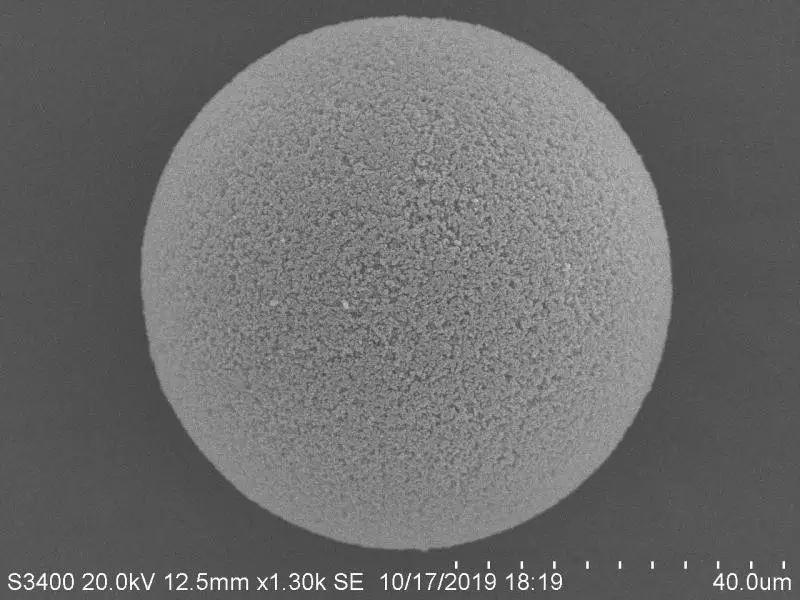
Biovanix supermacroporous ion exchange chromatography media deliver 10× the loading capacity of conventional agarose resins — engineered for precise control of pore sizes from 100 nm to 400 nm, preserving viral particle integrity at high flow rates.
10× Capacity vs. Agarose
Flow Rates up to 1,200 cm/h
Virus-Grade Pore Control
PS-DVB & PMMA Platforms
What Are Supermacroporous Polymer Microspheres?
Supermacroporous polymer microspheres are advanced chromatography media featuring interconnected macropores ranging from 100 nm to 400 nm. These pores are large enough to allow intact virus particles and viral-like particles (VLPs) to enter the bead interior and bind to ion exchange functional groups throughout the entire volume of the particle — not just on the surface.
Afin de répondre aux problèmes clés de la purification des virus et des particules virales, Biovanix a toujours fait preuve d'audace dans l'exploration de la technologie des procédés et dans le développement des produits. Ses recherches et sa production de milieux de chromatographie par échange d'ions super macroporeux ont permis un contrôle précis de la taille des pores des milieux de chromatographie. Par rapport aux supports de chromatographie conventionnels, ils sont plus performants en termes de capacité de charge et de vitesse de traitement. Il est plus propice au maintien de la structure des vecteurs viraux et des particules de type viral.
Biovanix Polymer Microspheres at a Glance
√ 10× loading capacity compared to conventional agarose media; 2× capacity vs. standard polymer media
√ Pore size range: 100 nm – 400 nm, precisely controlled across four series (S / M / G / V)
√ Two matrix platforms: PS-DVB (polystyrene-divinylbenzene) and PMMA (polymethyl methacrylate)
√ Four functional groups: SP (strong cation), Q (strong anion), CM (weak cation), DEAE (weak anion)
√ Flow rates: up to 1,200 cm/h (PS-DVB) and 750 cm/h (PMMA)
√ pH stability: 1–12 (PS-DVB), 2–12 (PMMA)
√ Applications: virus purification, VLP purification, large-molecule protein separation, gene therapy vectors
Five Key Advantages of Supermacroporous Polymer Microspheres
Engineered to overcome the limitations of conventional chromatography media for biologics purification.
01
Full Pore Accessibility for Viruses & Large Particles
Large molecules or viral particles can easily enter the pores for binding. The supermacroporous structure with pores from 100–400 nm allows intact viral vectors, VLPs, and protein complexes to access the entire internal surface area, not just the outer shell.
02
10× Loading Capacity vs. Agarose Media
The load capacity is more than 10 times that of conventional agarose media and twice that of conventional polymer media. This dramatic increase in binding capacity reduces column volume requirements and process time per batch.
03
Preserves Structural Integrity of Target Proteins
It can maintain the integrity of the structure of large molecular proteins, obtaining high yield and high activity of the target protein. Gentle binding kinetics and optimized ligand density minimize denaturation and aggregation during capture.
04
Low Non-Specific Adsorption, High Mechanization
After hydrophilic modification of the microsphere surface and the bonding of ion exchange groups, non-specific adsorption is low, and the degree of mechanization is high. This ensures reproducible results and scalable manufacturing processes.
05
Fast Mass Transfer at High Flow Rates
The molecular mass transfer rate is fast, and better separation can be achieved at higher flow rates. With flow rates up to 1,200 cm/h for PS-DVB series, these media deliver productivity gains without sacrificing resolution or binding capacity.
Two Chromatography Media Platforms
Choose the matrix material that best fits your purification process requirements.
PS-DVB Microspheres
Polystyrene-Divinylbenzene Matrix
Particle Size: 15 µm / 30 µm / 50 µm
Taille des pores : 100–400 nm (4 series)
Pression Maximale : up to 8.0 MPa
Stabilité du pH : 1–12
Flow Rate: up to 1,200 cm/h
Series: Poly15, Poly 50M, 50G, 50V
PMMA Microspheres
Polymethyl Methacrylate Matrix
Particle Size: 70 µm
Taille des pores : 100–400 nm (4 series)
Pression Maximale : up to 1.0 MPa
Stabilité du pH : 2–12
Flow Rate: up to 750 cm/h
Series: PM 70S, 70M, 70G, 70V
Need Help Selecting the Right Media for Your Application?
Our chromatography scientists can recommend the optimal product based on your target molecule, particle size, and process requirements.
Complete Product Specifications
All technical parameters for Biovanix supermacroporous polymer chromatography media.
PSDVB Particle Selection
| Matrice de soutien | Poly(styrène/divinylbenzène) (PS-DVB) |
| Ligand | Protéine A recombinante |
| Ave. Taille des particules | 50µm |
| Capacité de liaison dynamique (DBC) | Environ 40 mg d'IgG humaine/ml de milieu (Déterminé à la percée de 10% par analyse frontale à une vitesse de phase mobile de 500 cm/h dans une colonne avec une hauteur de lit de 5 cm, temps de séjour de 0,6 min) |
| Rétrécissement/gonflement | < 1% de 1-100% solvant organique |
| Gamme de pH (long terme) | pH 2-10 |
| Pression de fonctionnement maximale | 1500 psi (100 bar / 10 MPa) |
| Agents de nettoyage | 0,1-0,5M NaOH |
| Stabilité de la température | 4-40 °C |
| Conditions de livraison | 20% éthanol (2-8℃) |
| Produit | Poly15 SP | Poly15 Q | Poly30 SP | Poly30 Q |
| Matrice | Monodispersé PS-DVB | |||
| Taille des particules | 15um | 30um | ||
| Groupe de fonction | (-CH2)SO3- | -CH2N+(CH3)3 | (-CH2)SO3- | -CH2N+(CH3)3 |
| Densité du ligand | 0,22meq/mL | 0,24meq/mL | 0,15meq/mL | 0,18meq/mL |
| Capacité | 80mg Lys/mL | 45mg BSA/mL | 60mg Lys/mL | 30mg BSA/mL |
| Débit | 150~800cm/h | 250~1000cm/h | ||
| Max. Pression | 8.0MPa | 5.0MPa | ||
| Stabilité du pH | 2-12 | |||
| Stabilité chimique | Tous les tampons couramment utilisés, acide acétique 1M, oxychlorure de sodium 1M, acide chlorhydrique 1M, éthanol 70%, alcool isopropylique 30%, acétonitrile 30%, 1%SDS, chlorhydrate de guanidine 6M, urée 8M, et autres solvants organiques couramment utilisés ; éviter l'exposition à des oxydants puissants. | |||
| Température d'utilisation | 4~30°C | |||
| Stockage | 2~30°C, 20% éthanol | |||
| Produit | Poly 50M | |||
| Matrice | SP | Q | CM | DEAE |
| Taille des particules | PS-DVB | |||
| Groupe de fonction | 50um | |||
| Taille des pores | 100-150nm | |||
| Densité du ligand | 0,15meq/mL | 0,16meq/mL | 0,15me q/mL | 0,16me q/mL |
| Capacité | >80mgLys | >100mg BSA | >80mgLys | >90mg BSA |
| Débit | 300~1200cm/h | |||
| Pression maximale | 3,0MPa | |||
| Stabilité du pH | 1-12 | |||
| Stabilité chimique | Tous les tampons couramment utilisés, acide acétique 1M, oxychlorure de sodium 1M, acide chlorhydrique 1M, éthanol 70%, alcool isopropylique 30%, acétonitrile 30%, 1%SDS, chlorhydrate de guanidine 6M, urée 8M et autres solvants organiques couramment utilisés ; éviter l'exposition à des oxydants puissants. | |||
| Température d'utilisation | 4~30°C | |||
| Stockage | 2~30°C, 20% éthanol | |||
| Produit | Poly 50G | |||
| Matrice | SP | SP | SP | SP |
| Taille des particules | PS-DVB | |||
| Groupe de fonction | 50um | |||
| Taille des pores | 150-300nm | |||
| Densité du ligand | 0,14me q/mL | 0,14me q/mL | 0,14me q/mL | 0,14me q/mL |
| Capacité | >70mg Lys | >70mg Lys | >70mg Lys | >70mg Lys |
| Débit | 300~1200cm/h | |||
| Pression maximale | 2,0MPa | |||
| Stabilité du pH | 1-12 | |||
| Stabilité chimique | Tous les tampons couramment utilisés, acide acétique 1M, oxychlorure de sodium 1M, acide chlorhydrique 1M, éthanol 70%, alcool isopropylique 30%, acétonitrile 30%, 1%SDS, chlorhydrate de guanidine 6M, urée 8M et autres solvants organiques couramment utilisés ; éviter l'exposition à des oxydants puissants. | |||
| Température d'utilisation | 4~30°C | |||
| Stockage | 2~30°C, 20% éthanol | |||
| Produit | Poly 50V | |||
| Matrice | SP | SP | SP | SP |
| Taille des particules | PS-DVB | |||
| Groupe de fonction | 50um | |||
| Taille des pores | 300-400nm | |||
| Densité du ligand | 0,12me q/mL | 0,12me q/mL | 0,12me q/mL | 0,12me q/mL |
| Capacité | >70mg Lys | >70mg Lys | >70mg Lys | >70mg Lys |
| Débit | 300~1200cm/h | |||
| Pression maximale | 1,0MPa | |||
| Stabilité du pH | 1-12 | |||
| Stabilité chimique | Tous les tampons couramment utilisés, acide acétique 1M, oxychlorure de sodium 1M, acide chlorhydrique 1M, éthanol 70%, alcool isopropylique 30%, acétonitrile 30%, 1%SDS, chlorhydrate de guanidine 6M, urée 8M et autres solvants organiques couramment utilisés ; éviter l'exposition à des oxydants puissants. | |||
| Température d'utilisation | 4~30°C | |||
| Stockage | 2~30°C, 20% éthanol | |||
Sélection des particules de PMMA
| Produit | PM 70S | |||
| Matrice | SP | Q | CM | DEAE |
| Taille des particules | PMMA | |||
| Groupe de fonction | 70um | |||
| Taille des pores | 100nm | |||
| Densité du ligand | 0,18 meq/mL | 0,12meq/mL | 0,21meq/mL | 0,15meq/mL |
| Capacité | 115 mg Lys | 80mg BSA | 105 mg Lys | 80mg BSA |
| Débit | 150~750cm/h | |||
| Pression maximale | 1,0MPa | |||
| Stabilité du pH | 2-12 | |||
| Stabilité chimique | Tous les tampons couramment utilisés, acide acétique 1M, oxychlorure de sodium 1M, acide chlorhydrique 1M, éthanol 70%, alcool isopropylique 30%, acétonitrile 30%, 1%SDS, chlorhydrate de guanidine 6M, urée 8M et autres solvants organiques couramment utilisés ; éviter l'exposition à des oxydants puissants. | |||
| Température d'utilisation | 4~30°C | |||
| Stockage | 2~30°C, 20% éthanol | |||
| Produit | PM 70M | |||
| Matrice | SP | Q | CM | DEAE |
| Taille des particules | PMMA | |||
| Groupe de fonction | 70um | |||
| Taille des pores | 100-150nm | |||
| Densité du ligand | 0,15meq/mL | 0,12m eq/mL | 0,22meq/ mL | 0,11meq/mL |
| Capacité | 115 mg Lys | 80m g BSA | 105mg Lys | 80mg BSA |
| Débit | 150~750cm/h | |||
| Pression maximale | 0,8MPa | |||
| Stabilité du pH | 2-12 | |||
| Stabilité chimique | Tous les tampons couramment utilisés, acide acétique 1M, oxychlorure de sodium 1M, acide chlorhydrique 1M, éthanol 70%, alcool isopropylique 30%, acétonitrile 30%, 1%SDS, chlorhydrate de guanidine 6M, urée 8M et autres solvants organiques couramment utilisés ; éviter l'exposition à des oxydants puissants. | |||
| Température d'utilisation | 4~30°C | |||
| Stockage | 2~30°C, 20% éthanol | |||
| Produit | PM 70G | |||
| Matrice | SP | Q | CM | DEAE |
| Taille des particules | PMMA | |||
| Groupe de fonction | 70um | |||
| Taille des pores | 150-300nm | |||
| Densité du ligand | 0,11meq/mL | 0,12meq/mL | 0,10meq/mL | 0,09meq/mL |
| Capacité | > 70mg Lys | > 75mg BSA | > 70mg Lys | > 60mg BSA |
| Débit | 150~750cm/h | |||
| Pression maximale | 0,5MPa | |||
| Stabilité du pH | 2-12 | |||
| Stabilité chimique | Tous les tampons couramment utilisés, acide acétique 1M, oxychlorure de sodium 1M, acide chlorhydrique 1M, éthanol 70%, alcool isopropylique 30%, acétonitrile 30%, 1%SDS, chlorhydrate de guanidine 6M, urée 8M et autres solvants organiques couramment utilisés ; éviter l'exposition à des oxydants puissants. | |||
| Température d'utilisation | 4~30°C | |||
| Stockage | 2~30°C, 20% éthanol | |||
| Produit | PM 70V | |||
| Matrice | SP | Q | CM | DEAE |
| Taille des particules | PMMA | |||
| Groupe de fonction | 70um | |||
| Taille des pores | 300-400nm | |||
| Densité du ligand | 0,11meq/mL | 0,12meq/mL | 0,10meq/mL | 0,09meq/ mL |
| Capacité | > 70mg Lys | > 75mg BSA | > 70m g Lys | > 60mg BSA |
| Débit | 150~750cm/h | |||
| Pression maximale | 0,5MPa | |||
| Stabilité du pH | 2-12 | |||
| Stabilité chimique | Tous les tampons couramment utilisés, acide acétique 1M, oxychlorure de sodium 1M, acide chlorhydrique 1M, éthanol 70%, alcool isopropylique 30%, acétonitrile 30%, 1%SDS, chlorhydrate de guanidine 6M, urée 8M et autres solvants organiques couramment utilisés ; éviter l'exposition à des oxydants puissants. | |||
| Température d'utilisation | 4~30°C | |||
| Stockage | 2~30°C, 20% éthanol | |||
Product Selection Guide
Use this guide to choose the optimal polymer microsphere for your purification application.
PS-DVB vs. PMMA: Matrix Comparison
| Property | PS-DVB | PMMA |
|---|---|---|
| Particle Sizes | 15 / 30 / 50 µm | 70 µm |
| Pression maximale | Up to 8.0 MPa | Up to 1.0 MPa |
| Stabilité du pH | 1–12 | 2–12 |
| Débit maximum | Up to 1,200 cm/h | Up to 750 cm/h |
| Résistance chimique | Excellent (harsh CIP) | Good (standard CIP) |
| Best For | High-pressure, aggressive cleaning, broad pH | Biocompatible, gentle processing |
Pore Size Selection by Target Particle
| Series Code | Taille des pores | Recommended Application |
|---|---|---|
| S (Small) | 100 nm | Small viruses, proteins, protein complexes |
| M (Medium) | 100–150 nm | Medium viral vectors (AAV, lentivirus) |
| G (Large) | 150–300 nm | Large VLPs, enveloped viruses |
| V (Very Large) | 300–400 nm | Baculoviruses, plant viruses, large gene therapy vectors |
Applications
Supermacroporous polymer microspheres are purpose-built for challenging biologics purification workflows.
Purification de virus
Purify intact viral particles including AAV, lentivirus, adenovirus, and baculovirus with high recovery and preserved infectivity. The supermacroporous structure ensures full particle access to binding sites.
VLP Purification
Capture and purify virus-like particles (VLPs) used in vaccine development. Maintain structural integrity and antigenicity while achieving high yield through optimized pore sizes and gentle binding conditions.
Large-Molecule Protein Separation
Separate antibodies, antibody-drug conjugates (ADCs), fusion proteins, and other large protein complexes that cannot effectively penetrate conventional media pores.
Gene Therapy Vector Processing
Purify gene therapy delivery vectors at scale with chromatography media designed to handle the full size range of viral and non-viral vectors while maintaining biological activity.
Frequently Asked Questions
Common questions about supermacroporous polymer chromatography media.
What are supermacroporous polymer microspheres?
Supermacroporous polymer microspheres are advanced chromatography media featuring interconnected macropores ranging from 100 nm to 400 nm. These pores are large enough to allow intact virus particles and viral-like particles (VLPs) to enter and bind to ion exchange functional groups within the pores, delivering over 10 times the loading capacity of conventional agarose media. Biovanix produces these media in two matrix platforms: PS-DVB and PMMA.
What is the difference between PS-DVB and PMMA microspheres?
PS-DVB (polystyrene-divinylbenzene) microspheres offer superior chemical resistance, wider pH stability (1–12), and higher pressure tolerance (up to 8.0 MPa), making them ideal for aggressive cleaning and high-flow applications. PMMA (polymethyl methacrylate) microspheres provide biocompatible surfaces suited for sensitive biological samples and moderate operating conditions up to 1.0 MPa.
How do l choose the right pore size for virus purification?
Select pore size based on the diameter of your target particle: S series (100 nm) for small viruses and proteins, M series (100–150 nm) for medium-sized viral vectors such as AAV and lentivirus, G series (150–300 nm) for large VLPs and enveloped viruses, and V series (300–400 nm) for the largest viral particles such as baculoviruses and certain plant viruses.
What is the loading capacity of supermacroporous polymer microspheres?
Supermacroporous polymer microspheres deliver loading capacities exceeding 10 times that of conventional agarose media and twice that of standard polymer media. For example, PS-DVB Poly15 SP achieves 80 mg Lys/mL capacity, while PMMA PM 70S achieves 115 mg Lys/mL. The exact capacity depends on the product series, pore size, and functional group selected.
Can these microspheres be used for large-molecule protein purification?
Yes. The supermacroporous structure allows large-molecule proteins, antibodies, and protein complexes to access internal binding sites, maintaining structural integrity while achieving high yield and high activity recovery. The hydrophilic surface modification minimizes non-specific adsorption, ensuring clean separations even for sensitive biomolecules.
What functional groups are available?
Four functional group options are available across both platforms: SP (strong cation exchange, -CH₂SO₃⁻), Q (strong anion exchange, -CH₂N⁺(CH₃)₃), CM (weak cation exchange, carboxymethyl), and DEAE (weak anion exchange, diethylaminoethyl). Strong ion exchangers (SP, Q) are recommended for most virus purification applications due to their pH-independent binding characteristics.
What is the maximum flow rate for these chromatography media?
Flow rates range from 150 cm/h for the Poly15 series up to 1,200 cm/h for the Poly 50M/50G/50V PS-DVB series. The PMMA series operates at 150–750 cm/h. The fast mass transfer kinetics of supermacroporous microspheres enable efficient separation even at these elevated flow rates, significantly improving process throughput.
Ready to Optimize Your Purification Process?
Contact Biovanix for pricing, sample requests, or technical consultation on supermacroporous polymer microspheres.
 English
  العربية
  Français
  Deutsch (Sie)
  한국어
한국어  Русский
  Español de Argentina